

Titanium Dental Implants in Albania: Advantages, Longevity and What They Cost
Learn about titanium dental implants in Albania, including their advantages, biocompatibility, osseointegration, longevity, treatment process, and cost at Andent Clinic in Tirana. This guide explains why titanium remains the most trusted implant material, how long implants can last with proper care, and how international patients can access high-quality implant treatment at lower prices than the UK, Italy, Germany, and France.
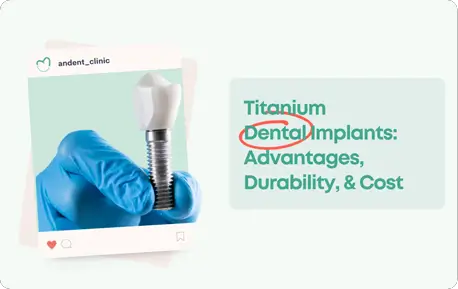
When it comes to dental implants, one of the first concerns is the type of material used. Not all materials offer the same security, durability, and long-term effectiveness. That’s why at Andent Clinic, we have chosen titanium exclusively for our titanium dental implants Albania.
Why Do We Choose Titanium for Our Dental Implants?
For over 40 years, titanium has been the most used and recommended material in implantology. The main reason for this is its remarkable biocompatibility. Titanium is a material that our body can accept very well. After the procedure, the implant naturally integrates with the bone, significantly reducing the risk of allergies or rejection.
At Andent Clinic in Albania, we use only titanium for our implants because, based on our experience, we know it is the safest and most reliable choice in the long run. For us, your health and the peace of mind of those who trust our care come first.
How Long Does a Titanium Dental Implant Really Last?
One of the most common questions from our patients is about the longevity of titanium implants. The answer primarily depends on the care a person gives to their oral health. With proper care, a titanium dental implant can last anywhere from 20 years to, in many cases, even a lifetime.
However, maintaining strict daily oral hygiene and having regular checkups are essential.
At Andent Clinic in Albania, we not only assist with the implant placement but are also by your side afterward, helping you care for your implant in the best possible way.
How to Choose the Right Dental Implant for You?
If you’re between 45 and 65 years old and want to smile naturally and confidently again, titanium dental implants are clearly one of the most reliable options. The treatment is now widespread, quick, and safe, allowing anyone to regain the comfort and freedom to smile, talk, and eat without limitations.
With our experience at Andent, we can guide you carefully toward the smile you desire by listening to and understanding your personal needs.
Zygomatic Implants: What Are They and When Are They Used?
Andent Clinic, located in Albania, has become a popular destination for many Italian patients seeking a healthy, natural, and long-lasting smile at affordable prices. Our highly qualified experts use only high-quality materials and techniques to ensure excellent long-term results.
If you are considering choosing a dental implant, contact us for a personalized consultation. According to, we will be happy to offer all the necessary support and guide you through the journey toward the smile you have always wanted.
Why Titanium Became the Definitive Material for Dental Implants
The story of titanium in dentistry begins in the 1960s with a Swedish scientist named Per-Ingvar Branemark who discovered, almost by accident, that titanium chambers he had implanted in rabbit bones were impossible to remove because the metal had fused with the living tissue. He spent the following years understanding this phenomenon, which he named osseointegration, and eventually applied it to dentistry. The first titanium dental implant was placed in a human patient in 1965. That patient lived for 40 years with those implants intact.
In the decades since, titanium implants have been placed in millions of patients worldwide and have accumulated a clinical evidence base that no other implant material comes close to matching. Success rates above 95 percent over ten years are routinely documented in peer-reviewed research. The combination of biocompatibility, mechanical strength, osseointegration capacity, and long-term durability makes titanium the most logical choice for any patient considering dental implants.
What Makes Titanium Biocompatible?
Biocompatibility refers to a material’s ability to exist within the human body without triggering a harmful immune response. The body needs to tolerate an implant not just initially, but over decades of continuous contact with living tissue. Titanium achieves this through a natural oxide layer that forms on its surface when exposed to oxygen. This titanium dioxide layer is stable, inert, and chemically accepted by the body’s cells as a compatible structure.
When a titanium implant is placed in the jawbone, the surrounding bone cells begin to grow directly against and into the microscopic surface features of the titanium. This is osseointegration in action. Over three to six months, the implant becomes structurally part of the jaw, mechanically locked in place by bone tissue growing around and into it. The result is a foundation that can withstand bite forces equivalent to those placed on natural tooth roots.
True titanium allergy exists but is rare, affecting less than one percent of the population. Before any implant surgery at Andent, a full medical history review identifies any contraindications. For the overwhelming majority of patients, titanium is perfectly tolerated from day one with no adverse reaction.
How Long Do Titanium Dental Implants Last?
With proper care, a titanium dental implant can last for the rest of your life. This is not marketing language. It is a statement backed by clinical evidence. The original patients treated by Branemark in the 1960s and 1970s kept their implants functional for three to four decades. Long-term studies consistently show survival rates of 85 to 95 percent at 20 years for titanium implants placed by trained surgeons using proper protocols.
The crown on top of the implant, the visible tooth-coloured restoration, does not last as long as the implant itself. Crown lifespan depends on the material used, with zirconia crowns typically lasting 15 to 20 years with proper care. Replacing a crown when needed is a straightforward procedure that does not affect the underlying implant.
The main factors that can shorten implant lifespan are smoking, poorly controlled diabetes, inadequate oral hygiene, and bruxism (tooth grinding). Patients who manage these factors carefully can expect their implants to function without issue for many decades.
The Cost of Titanium Implants at Andent Clinic in Albania
Andent Clinic in Tirana has made high-quality titanium implants accessible to patients who cannot justify the prices charged in their home country. A single titanium implant with a zirconia crown at Andent starts from 400 euros, compared to 2,000 to 3,500 pounds in the UK and 1,500 to 2,500 euros in Italy.
The implant systems used at Andent are sourced from established manufacturers with strong clinical track records. These are not budget alternatives. They are the same class of implant used in top European clinics, available at a fraction of the price because of Albania’s lower operating costs and the absence of VAT on medical procedures.
For patients needing multiple implants, the savings become more substantial. All-on-4 full arch treatment at Andent costs from 3,200 euros per arch, compared to 12,000 to 20,000 euros per arch in Germany or France. For patients needing both arches treated, the total saving can exceed 20,000 euros even after accounting for flights and accommodation.
Who Is a Good Candidate for Titanium Implants?
Most adults with missing teeth are suitable candidates for titanium dental implants. The essential requirement is sufficient healthy jawbone to support the implant. Where bone volume has been lost due to tooth extraction, bone grafting can be performed to build it up before or simultaneously with implant placement. Andent offers bone grafting procedures and can assess your bone volume using CBCT three-dimensional scanning during your initial consultation.
Age is rarely a barrier. Patients in their sixties, seventies, and even eighties have received successful implant treatment at Andent. The key is that bone healing capacity remains adequate and that any systemic health conditions are well-managed.
Children and teenagers are not suitable candidates because their jaws are still growing. Implants should be placed only after jaw development is complete, typically in the late teens for girls and early twenties for boys.
The Implant Process at Andent: From Consultation to Final Crown
The process begins with a comprehensive consultation and digital assessment. CBCT three-dimensional imaging maps the bone and identifies any anatomical structures to avoid during surgery. A treatment plan is created and presented to the patient with full cost disclosure before any commitment is made.
Implant surgery is performed under local anaesthesia. For anxious patients, conscious sedation is available. The titanium fixture is placed precisely within the bone according to the digital plan. Sutures close the incision site, and the patient is given post-operative instructions and prescribed medication.
Three to six months later, once osseointegration is confirmed, the final crown is attached. The crown is custom-fabricated in Andent’s in-house laboratory to match the shape, size, and colour of the surrounding teeth. At the fitting appointment, minor adjustments are made until the result is exactly right.
Frequently Asked Questions About Titanium Implants in Albania
Is a titanium implant safe for people with metal sensitivities?
Titanium is not a common allergen and behaves differently from metals like nickel, which cause most metal sensitivities. Discuss any known metal sensitivities with the Andent clinical team during your consultation.
What is osseointegration and how do I know it has worked?
Osseointegration is the fusion of the implant with the surrounding bone. It is confirmed through a clinical examination and digital X-ray at the three to six month follow-up appointment. The dentist checks stability and bone levels around the implant before proceeding to crown placement.
Does having a titanium implant affect MRI scans?
Titanium is non-ferromagnetic, meaning it is not attracted to magnets and does not cause significant interference with MRI imaging. It is generally considered safe for MRI procedures. Inform the radiologist that you have dental implants before any scan.
How long does the implant surgery take?
A single implant procedure typically takes 60 to 90 minutes including anaesthesia and preparation. Placing multiple implants takes correspondingly longer. All-on-4 procedures typically take three to four hours per arch.
Can I have implants if I have gum disease?
Active gum disease must be treated and controlled before implant placement. Andent’s clinical team will assess your gum health at the consultation and recommend any preparatory treatment needed before implants can proceed.
Newsletter
Get Dental Tips in Your Inbox
One email per month. Expert guides, patient stories, and exclusive offers — no spam.
Get Started
Free Treatment Plan in 24 Hours
Send us your X-rays or photos. Our specialists will reply with a full, personalised quote — no obligation.
Latest Articles
-
 October 4, 2026
Why Are Dental Implants So Expensive? (And How to Pay 70% Less)
Learn what drives dental implant costs in the UK, why the NHS rarely covers implants, and how treatment in Tirana can reduce the total… Read more
-
 October 4, 2026
How Long Are NHS Dentist Waiting Lists? (And the Fastest Way to Skip the Line)
See how long NHS dentist waiting lists can be, why delays happen, how dental problems can progress, and what alternatives UK patients may consider. Read more
-
 October 3, 2026
How to Find Affordable Dental Care Without Insurance
Explore practical ways to find affordable dental care without insurance, from dental schools and payment plans to lower-cost treatment at Andent Clinic in Tirana. Read more
Ready to Start?
Your New Smile is One
Consultation Away
Send us your X-rays or dental photos and receive a personalised treatment plan with clear pricing within 24 hours — completely free of charge. No obligation. No pressure. Just clarity.