

The people who read
your X-ray and do your treatment
are the same person.
At most international dental clinics the quote comes from a coordinator and the surgery happens with a surgeon you have never spoken to. At Andent Clinic, Dr. Çurmaku reviews every treatment plan before it is sent. Then she performs the treatment. No handoff, no interpretation. The same eyes, the same hands, the same standard of care.
 Straumann Certified Implantologist (active, renewed annually)
Nobel Biocare All-on-4 Certified (active, renewed periodically)
Straumann Certified Implantologist (active, renewed annually)
Nobel Biocare All-on-4 Certified (active, renewed periodically) Dental Degree, Faculty of Medicine, University of Tirana
Qualifications and Certifications
-
Doctor of Dental Surgery (DDS) Faculty of Medicine and Dentistry, University of Tirana, 6-year programme
-
Straumann Certified Implantologist Active certification from Straumann Group, Basel, Switzerland. Renewed annually through manufacturer-led training
-
Nobel Biocare All-on-4 Certified Active certification from Nobel Biocare AB, Gothenburg, Sweden. Covers original full-arch protocol and updated placement techniques
-
Licensed by the Albanian Ministry of Health Full professional licence for dental surgery in the Republic of Albania. Registered with Albanian Dental Association
-
Member of European Association for Osseointegration (EAO) Annual membership, access to latest peer-reviewed research and continuing education in implant dentistry
-
18+ years of clinical practice Founded Andent Clinic in 2007. Over 15,000 patients treated. Specialist expertise in full-arch implant rehabilitation, complex restorative cases, and aesthetic dentistry

Languages spoken
- AlbanianNative language
- EnglishClinical and patient communication
- ItalianFluent, patient communication
- FrenchWorking level, patient communication
The surgeon who built this clinic
still treats every patient in it
Dr. Anduela Çurmaku founded Andent Clinic in Tirana in 2007 with a straightforward intention: to build a dental practice that treated international patients to the same standard they expected at home, not to a lower standard justified by a lower price. Today, she personally leads complex cases involving dental implants, All-on-4 dental implants in Albania, oral surgery, full-mouth rehabilitation, and advanced restorative dentistry.
Eighteen years later, she still reads every incoming panoramic X-ray personally before a treatment plan is sent. She still performs implant procedures and complex oral surgery cases. She still walks through the in-house laboratory to discuss shade matching with the technician on dental crown and aesthetic restoration cases. The clinic has grown around her. Her involvement in individual cases has not shrunk.
Education and the journey to implantology
The dental degree at the Faculty of Medicine and Dentistry at the University of Tirana is a six-year programme that covers all areas of clinical dentistry. Dr. Çurmaku completed the degree with a focus on surgical dentistry, prosthetics, and oral rehabilitation before developing her specialist expertise in implantology and oral surgery.
Her choice to specialise in implantology was deliberate and early. She observed during her training that the outcomes that changed patients’ lives most dramatically were not only cosmetic ones. They were restorative ones: the patient who had been toothless for years and had fixed teeth again, the patient who had refused to smile in photographs for a decade and now could not stop. You can see real examples in the smile gallery and read detailed patient testimonials from people treated at Andent Clinic.
How she works with international patients
Every patient who sends an X-ray to Andent Clinic enters a process that involves Dr. Çurmaku directly from the start. She reads the panoramic X-ray, assesses the bone, identifies the appropriate treatment, and either confirms or adjusts the treatment plan suggested by the patient’s enquiry. This is especially important for patients travelling for dental tourism in Albania, because they need clear clinical information before booking flights.
The plan that reaches the patient has her clinical judgement behind it, not a pricing template applied by a coordinator. When the patient arrives in Tirana, Dr. Çurmaku performs and reviews the 3D CBCT assessment on the first day before any procedure begins. If the scan reveals anything that changes the plan communicated before travel, she explains why and what the options are.
The patient makes an informed decision before treatment starts. This same clinical planning approach is used for single implants, dental bridges, dental crowns, full-arch implant treatment, and complex restorative work. To send your X-ray or receive a personal evaluation, you can request a free consultation.
“I read every X-ray that comes in. I want to know what I am dealing with before the patient arrives, not on the morning of surgery. That is the only way I can promise a specific outcome. If I cannot see clearly what the case needs, I say so. A treatment plan built on uncertainty helps no one.”
How to verify Dr. Çurmaku’s credentials independently
Straumann and Nobel Biocare both maintain registries of certified clinicians. Patients can contact either manufacturer directly to verify that Dr. Çurmaku holds active certification. The Albanian Dental Association can confirm her professional registration. Patients can also ask Andent Clinic for professional documentation, implant brand details, and the implant passport after treatment. For more context, review the clinic’s dental tourism process, explore before and after results, or contact the clinic before booking.
Straumann and Nobel Biocare:
why certification matters
Dr. Çurmaku holds active certifications from both major implant manufacturers. Here is what those certifications actually mean, why they require annual renewal, and why using an implant brand without manufacturer certification is a meaningful clinical difference, not an administrative one. This matters especially for patients considering dental implants in Albania, All-on-4 dental implants, or a complete dental tourism treatment plan at Andent Clinic.
Straumann is the world’s most cited implant manufacturer in peer-reviewed dental literature. Their SLActive titanium surface, developed after decades of bone biology research, is the clinical benchmark against which other implant surfaces are compared. The Straumann BLX implant system, which Dr. Çurmaku uses for single and multiple tooth replacements, has accumulated over 15 years of prospective clinical data showing osseointegration rates above 97% at ten years across multiple independent study populations.
- Certification covers surgical protocol, torque specifications, bone preparation, and provisional loading timing
- Annual renewal requires participation in Straumann-led clinical training and protocol updates
- Only certified clinicians receive direct access to updated placement guidelines as Straumann publishes them
- Original manufacturer components are guaranteed available globally, so crown replacements on the same implant are possible anywhere in the world
Nobel Biocare invented the concept of osseointegrated implants and holds the original patents on the All-on-4 full-arch treatment protocol. The All-on-4 technique, which uses four strategically positioned implants to support a fixed full-arch prosthesis, is backed by over 20 years of prospective outcome studies. Nobel Biocare’s NobelActive and NobelParallel implant systems are used in the world’s most demanding implant centres. Dr. Çurmaku’s certification covers both standard implant placement and the specific All-on-4 protocol.
- All-on-4 certification covers the original Nobel Biocare protocol for full-arch immediate loading
- Certification includes angulated implant placement technique for posterior support without sinus grafting in most cases
- Nobel Biocare maintains a global register of All-on-4 certified clinicians that patients can verify independently
- Protocol access includes updated prosthetic component specifications and loading force parameters
Why using these brands without certification would be a different thing entirely
A clinic can purchase Straumann and Nobel Biocare implants without being certified by either manufacturer. The implants will be genuine. But the placement will not benefit from direct access to the manufacturer’s updated surgical protocols, and the clinician will not have completed the training programme that both manufacturers designed to ensure their products are placed according to the specifications under which their clinical evidence was generated. A ten-year survival rate of 97% is a statistic produced under specific placement conditions. Those conditions are what the certification programmes teach and maintain. Before choosing dental implant treatment, patients can also review Andent Clinic’s before and after smile gallery, read real patient testimonials, or request a free consultation.
A small clinic with
a complete clinical team
Andent Clinic is deliberately not a large-volume factory. It operates with a compact team of specialists who know each patient’s case. The coordination team spans five languages. The laboratory technician works in the same building as the clinical team. Everyone involved in your treatment has a clear and singular role, from dental implants and dental crowns to full dental tourism in Albania treatment plans.
The International Patient Coordinator
The coordinator is the person who answers your first WhatsApp message, manages your pre-travel questions, books the hotel and airport transfers, and is present throughout your stay to help with anything non-clinical. For patients travelling from the UK, Germany, France, Italy, or Spain, the coordinator communicates in their native language throughout the entire process.
The coordinator does not write treatment plans or give clinical advice. She connects patients with the clinical team, translates non-clinical communications, and handles the logistics that make a dental tourism experience manageable. Patients consistently mention her in their reviews and testimonials as one of the standout aspects of the experience.
“I answer every message personally. There are no automated responses at this clinic. When you write to us, a person reads it and writes back.”
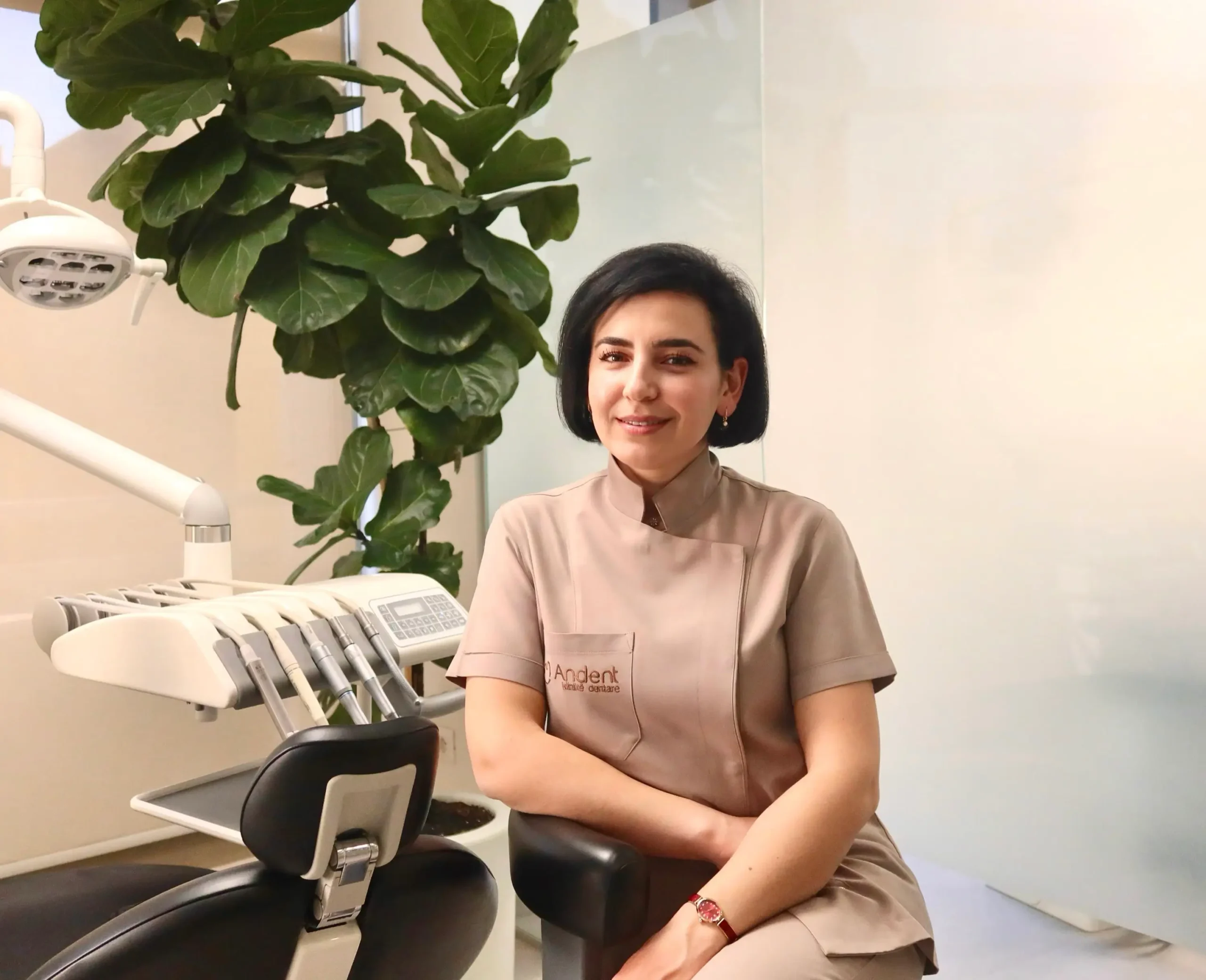
Leads complex implant rehabilitation, oral surgery, treatment planning, and advanced full-arch cases. She personally reviews international treatment plans before arrival and works closely with the team on implant dentistry, All-on-4 treatment, and complex restorative cases.
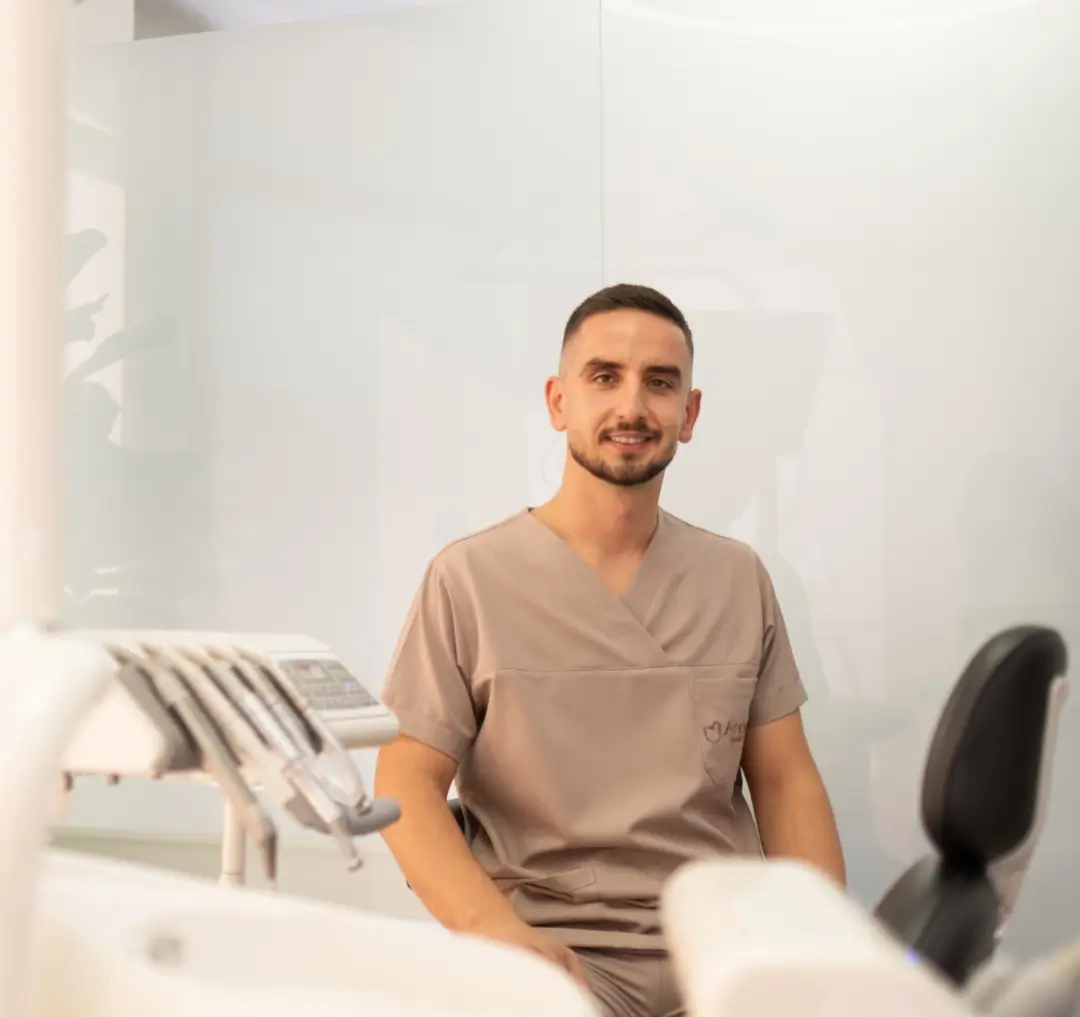
Performs complex implant placements, oral surgeries, and bone grafting. Reviews international implant cases before arrival and is specialized in Straumann and Nobel Biocare systems, ensuring high-precision surgical outcomes for complex restorations and dental implant treatment.
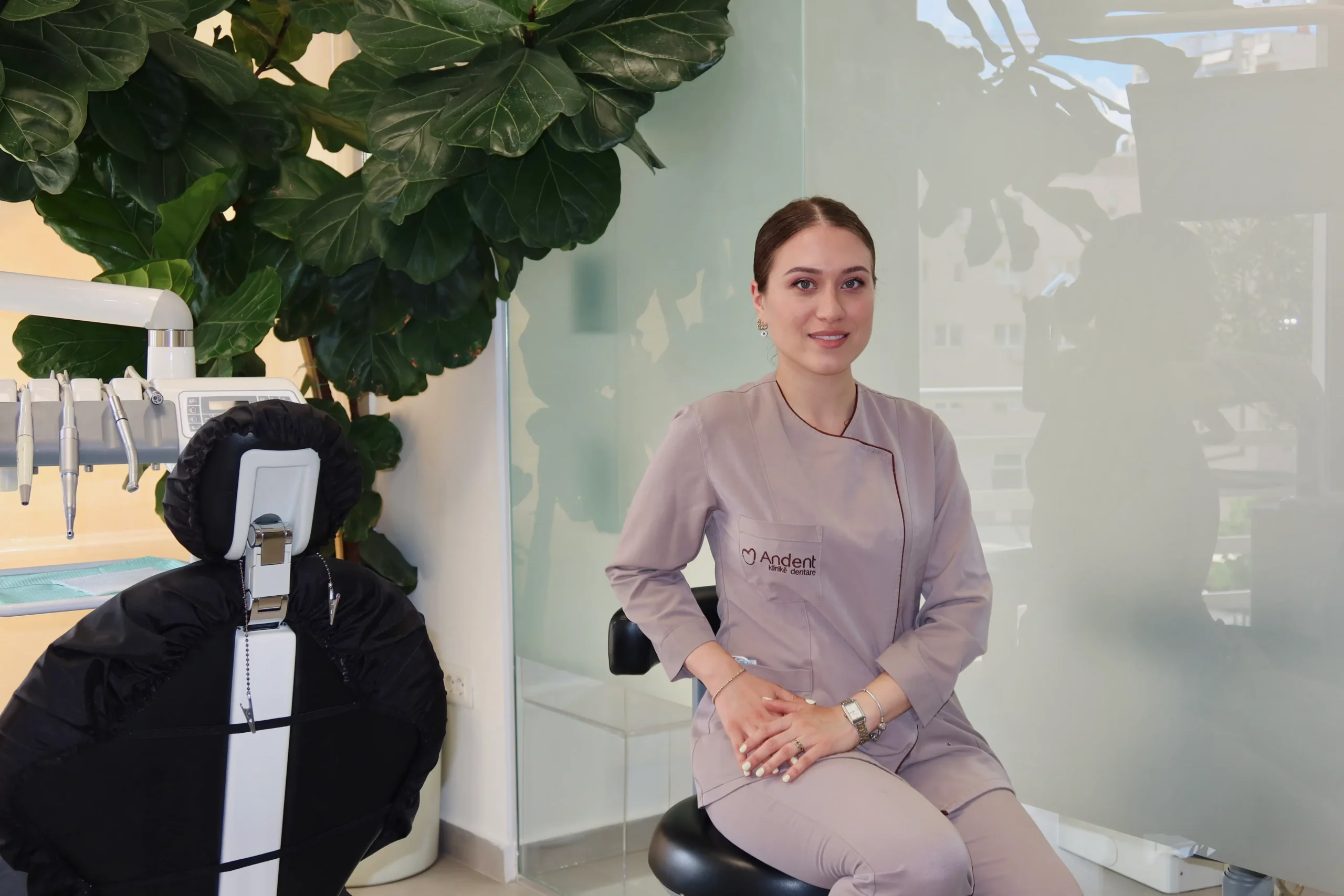
Strong background in oral diagnosis, restorative dentistry, prosthodontics, endodontics, and advanced aesthetic procedures including Hollywood Smile. Manages crown preparation, bite analysis, and definitive cementation. Works directly with the lab for precise aesthetic matching in dental crown, veneer, and smile design cases.
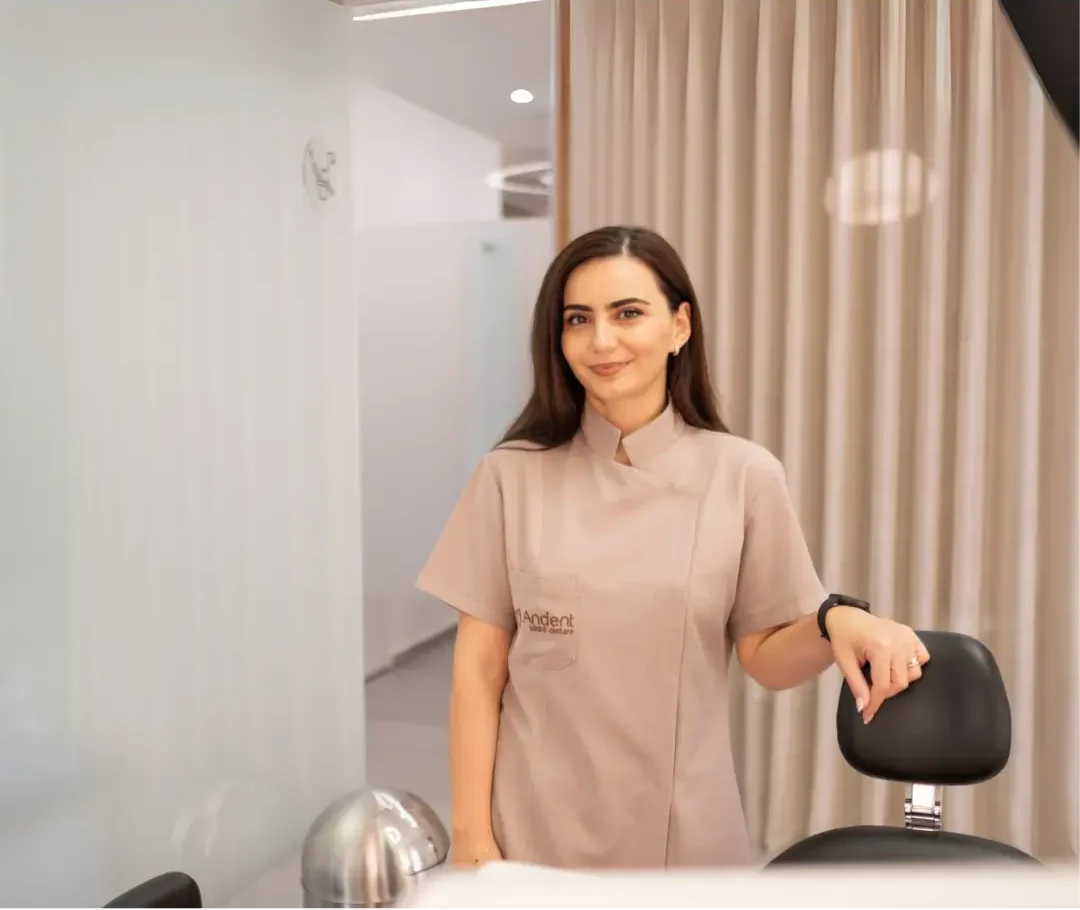
Supports prosthodontic planning, bite analysis, and restorative workflows for crowns, bridges, and definitive restorations. Works with the clinical team and laboratory to support accurate fit, function, and aesthetics in dental crowns and dental bridges.
The team manages sterilisation protocols and provides post-operative patient support. All staff hold recognised dental nursing qualifications. You can explore real outcomes in the smile gallery, read patient testimonials, or request a free consultation.
Staying current is not
optional in implantology
Implant dentistry is one of the fastest-moving specialties in clinical medicine. Materials science, surface technology, loading protocols, and prosthetic design have all changed substantially even in the last five years.
Dr. Çurmaku’s approach to staying current is systematic rather than opportunistic. The Straumann and Nobel Biocare certification programmes provide a structured update cycle: annual manufacturer training for Straumann, periodic recertification for Nobel Biocare’s All-on-4 protocol. These are not conferences attended for networking purposes. They are clinical training sessions focused on what has changed, why it has changed, and how the change affects placement technique.
The prosthodontics team follows a similar pattern of continuing professional education in ceramic materials, digital impressioning, and CAD/CAM fabrication for dental crowns, bridges, and full-mouth restorations. The laboratory technician attends specialist training in zirconia milling and shade science every year. The materials science of modern ceramics is advancing rapidly, and the technical capability to work with those materials needs to advance alongside it.
Annual Straumann certification renewal
Covers updated surgical protocols, new implant system features, and revised osseointegration guidance from Straumann’s ongoing research programme for single and multiple dental implant cases.
Nobel Biocare All-on-4 protocol updates
The All-on-4 protocol has been refined multiple times since its introduction. Certification renewal ensures that the technique used at Andent Clinic matches the current manufacturer specification.
Laboratory technician ceramic training
Annual specialist training in CAD/CAM milling precision, zirconia sintering protocols, and E.max ceramic handling. Ceramic materials science is not static, especially for dental crown, bridge, and smile restoration cases.

Peer-reviewed literature review
Dr. Çurmaku maintains a regular reading practice across the major implantology and prosthodontics journals. Clinical decisions at Andent Clinic are informed by published evidence, not manufacturer marketing materials alone. Patients can also review real outcomes in the smile gallery and patient testimonials.

European implantology congress attendance
The team attends selected European implantology congresses to observe new techniques, challenge clinical assumptions, and maintain connections with the wider specialist community. This matters especially for international patients choosing dental tourism in Albania. To discuss your case, you can request a free consultation.
How the clinical team interacts
with international patients specifically
Treating a patient from London or Zurich requires a different kind of preparation from treating a local patient. The international patient cannot come back for a minor adjustment next week. The clinical planning needs to be more thorough before travel, and the documentation needs to be complete enough for a dentist in another country to work from it.
Dr. Çurmaku has developed a specific protocol for international patients over 18 years of treating them. It begins before the patient boards a plane and extends indefinitely after they return home.
Pre-travel case review by Dr. Çurmaku personally
Every panoramic X-ray is assessed by the lead surgeon, not by an AI tool or a sales coordinator working from a pricing guide. The assessment covers bone volume, existing restorations, potential complications, and the most appropriate treatment sequence. Borderline cases are flagged before the patient travels.
3D CBCT scan on arrival, reviewed with the patient
The first appointment in Tirana is the 3D cone beam scan. Dr. Çurmaku reviews it with the patient present and explains what it shows. If anything changes the pre-travel plan, this is discussed before any procedure begins. Patients never discover a plan change after they are already in the chair.
Step-by-step surgical briefing before each procedure
Before any surgery, Dr. Çurmaku explains what is about to happen, what sensations to expect, and what the patient should communicate if something feels wrong. International patients consistently note in their reviews that nothing happened during surgery that they had not been told about.
Clinical documentation prepared for home dentist use
Every patient leaves with a clinical report written in English that covers everything a home dentist needs to continue care: implant brand, model, diameter, length, torque applied, provisional protocol, and any specific post-operative instructions. The report is structured for clinical use, not patient communication.
Indefinite WhatsApp access to the clinical team
There is no time limit on reaching the clinical team after treatment. When post-operative questions arise, they go to the same team that performed the treatment. The responses come from clinical knowledge of the specific case, not from a generic aftercare protocol.
X-ray reviewed by Dr. Çurmaku. Treatment plan returned within 24 hours. Coordinator organises logistics. Pre-departure briefing sent by the clinical team.
Dr. Çurmaku directly involved3D scan. Dr. Çurmaku reviews results with you. Final plan confirmed. Any adjustments explained before proceeding. Coordinator available throughout.
First in-person consultationDr. Çurmaku performs all surgical procedures. Prosthodontist handles crown preparation and fitting. Lab technician attends shade consultations in person.
Named clinicians, known to youFull clinical report in English. Written guarantee. Implant and crown references for home dentist. Airport transfer. WhatsApp number for aftercare.
Complete documentation providedWhatsApp access to the clinical team with no time limit. Questions answered by the team that performed your treatment. Coordination with local dentist where needed.
Indefinite aftercare accessThe clinical environment that
supports the clinical team
The quality of a treatment is not determined only by the skill of the clinician. It is also determined by the equipment available, the sterilisation protocols followed, and the quality of the materials used. Here is what Andent Clinic has built to support the clinical team’s work in dental implants, dental crowns, dental bridges, and full-mouth rehabilitation for international patients.



Sterilisation and infection control protocol
All surgical instruments used at Andent Clinic undergo class B autoclave sterilisation, the highest standard applicable to dental surgical instruments. Autoclaves are validated and calibrated in accordance with European medical device standards. Sterility test cycles are documented.
Single-use implant components including drills, irrigation cannulae, and suture materials are disposed of after each procedure. No single-use surgical item is reprocessed. The packaging of every implant placed is retained and the batch number is recorded in the patient’s clinical documentation so that the provenance of the device can be traced at any point in the future.
The clinic operates a no-compromise policy on infection control: every component that touches the surgical field is either sterile from the manufacturer or has been validated through the clinic’s own sterilisation cycle. This same protocol supports treatments for dental implants in Albania, dental crowns, dental bridges, All-on-4 implants, and dental tourism patients travelling to Tirana.
Why the person who reads your X-ray and the person who treats you being the same matters
In dentistry, as in most medical specialties, the quality of the outcome is closely related to the quality of the planning. And the quality of the planning is closely related to how well the clinician who plans the treatment understands the case. When the planning clinician and the treating clinician are different people, information is translated. Nuances about bone density, existing restorations, or patient anxiety that were evident to the planner have to survive a handoff to remain available to the surgeon.
At Andent Clinic, nothing is translated between the planning stage and the surgical stage. Dr. Çurmaku reads the X-ray. She forms a clinical picture of the patient’s situation. She writes the treatment plan. She performs the treatment. The continuity is complete. The patient who arrives in Tirana is being treated by the clinician who has already been thinking about their specific case for days or weeks before they arrive.
The 18-year duration of the practice is not a marketing statistic. It is a measure of something real. A clinician who has placed 3,000 implants across 18 years has encountered the complications that a clinician with 300 implants over three years has not. They know what a failed implant looks like at the two-week post-operative appointment because they have seen that outcome and managed it. They know how to adjust an All-on-4 plan on the day of surgery when the bone turns out to be softer than the CT scan suggested, because that has happened before and they have navigated it before.
For a patient travelling from the UK, Germany, or Switzerland for a treatment that represents a significant financial commitment and a meaningful health intervention, the question of who will actually perform the procedure is the most important question they can ask. At Andent Clinic, the answer is unambiguous, verifiable, and consistent.
What patients ask about the doctors at Andent Clinic
Speak directly with the team
Send your X-ray and Dr. Çurmaku reviews your case personally. Treatment plan and exact pricing returned within 24 hours.
Mon to Sat · 9:00 to 18:00 CET
WhatsApp available 7 days
Response within 24 hours
What patients say about
their treatments at Andent


Your X-ray. Dr. Çurmaku’s eyes.
A plan within 24 hours.
Send a panoramic X-ray or clear photos. The lead surgeon reviews your case and responds with a personalised treatment plan and exact pricing. No cost, no obligation, no pressure.