

Dental Implants in Albania: How They Work, How Long They Last, and Why Andent
Learn how dental implants in Albania work, including implant placement, healing, osseointegration, crown fitting, and full-arch All-on-4 or All-on-6 options at Andent Clinic in Tirana. This guide explains who is a good candidate, how long implants last, treatment costs compared with the UK, Italy, and Germany, and why international patients choose Andent for implant dentistry abroad.
Missing Teeth Are Not Just an Aesthetic Problem
Losing a tooth is one of those dental events that feels significant in the moment and then gradually fades from conscious attention, until the consequences begin to accumulate. A missing tooth changes the way you bite. It allows neighbouring teeth to drift. It removes stimulation from the underlying bone, which then begins to resorb. Over years, a single missing tooth can create a cascade of oral health problems that become progressively more expensive to address.
A dental implant interrupts that cascade entirely. By placing a titanium root in the jaw and attaching a crown, Andent’s implant team restores full function to the missing tooth site. The implant integrates with the bone, stops the resorption process, keeps neighbouring teeth in position, and provides a permanent, natural-looking tooth that requires the same basic care as any natural tooth.
For patients considering dental implants in Albania, Andent Clinic in Tirana offers a combination of clinical expertise, advanced technology, and pricing that makes quality implant treatment accessible to people who have been priced out of the procedure in their home country.
How the Dental Implant Procedure Actually Works
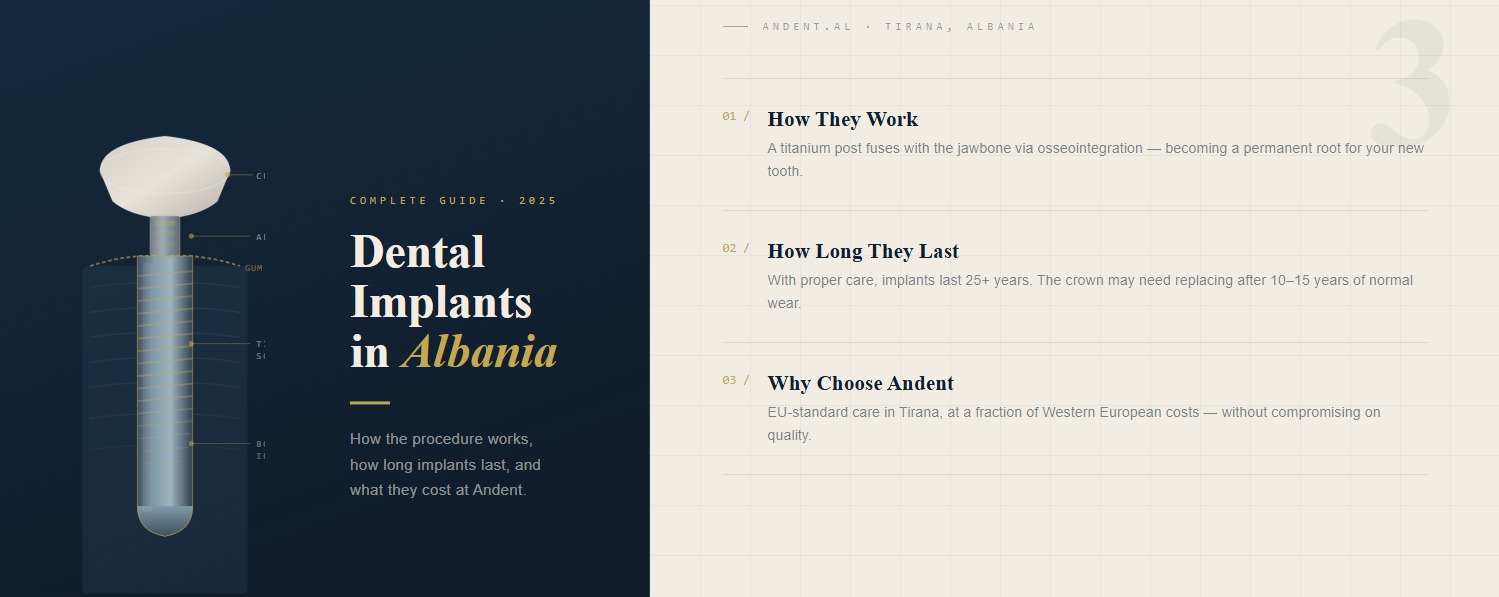
The process begins before a single implant is placed. At the initial consultation, Andent uses Cone Beam Computed Tomography, a three-dimensional scanning technology, to map the exact anatomy of the jaw at the implant site. This scan reveals bone density, bone height, the precise position of the inferior alveolar nerve in the lower jaw, and the proximity of the sinus floor in the upper jaw. This information is fed into implant planning software, which generates a digital surgical guide showing exactly where each implant should be placed for maximum stability and safety.
The surgery itself is performed under local anaesthesia. Patients typically describe the experience as less painful than a tooth extraction. An incision is made in the gum, a precise channel is prepared in the bone following the digital plan, and the titanium implant fixture is seated at the planned depth and angle. The gum is closed with sutures, and the patient leaves with post-operative instructions and prescribed medication.
Over the following three to six months, the process of osseointegration takes place. Bone cells grow directly onto the surface of the titanium fixture, eventually locking it into position as firmly as a natural tooth root. This is not a painful process. Most patients are entirely unaware of it happening. Life continues normally during this period.
At the follow-up appointment, typically three to five months after surgery, the osseointegration is confirmed through clinical examination and digital X-ray. The dentist then attaches a small connector piece called an abutment to the top of the implant, and a custom-fabricated crown is attached to the abutment. The crown is colour-matched, shaped, and contoured to blend seamlessly with the surrounding teeth.
All-on-4 and All-on-6: Full Arch Implant Treatment
For patients who have lost most or all of their teeth in one or both arches, individual implants for every missing tooth are not the most practical approach. All-on-4 and All-on-6 techniques offer a more efficient solution that provides a full arch of fixed teeth supported by just four or six implants.
The All-on-4 technique places four implants per arch, with two implants positioned at a specific angled orientation towards the rear of the arch to maximise bone contact. A full-arch bridge of typically twelve teeth is attached to these four implants. The result is a complete fixed set of teeth that functions and looks like natural teeth, at a fraction of the cost of replacing every tooth individually.
All-on-6 follows the same principle with two additional implants, providing slightly greater support and stability. It is recommended for cases where bone quality or volume makes four implants insufficient to safely support the full arch restoration.
One of the most significant advantages of All-on-4 treatment at Andent is that temporary teeth can be fitted on the same day as surgery, so patients leave the clinic that evening with a complete smile. The final permanent bridge is placed three to five months later after osseointegration is confirmed.
Who Is a Good Candidate for Dental Implants in Albania?
The majority of adults who are missing one or more teeth are potential candidates for dental implants. The fundamental requirement is sufficient healthy bone to support the implant. Where bone has been lost due to prolonged tooth absence, infection, or gum disease, bone grafting procedures can rebuild the necessary volume before implants are placed.
Systemic health is also relevant. Patients with well-controlled diabetes, hypertension, or other chronic conditions can usually receive implants safely. Active smokers face elevated risks and are strongly advised to stop smoking before treatment. Patients taking certain medications, including bisphosphonates for osteoporosis and anticoagulants, require careful assessment, and the Andent clinical team reviews all medications during the consultation.
Age is rarely a limiting factor in itself. Andent has placed successful implants in patients into their eighties. The quality of bone and the patient’s general health matter more than chronological age.
The Cost of Dental Implants in Albania vs Staying Home
A single implant with crown at Andent starts from 400 euros. In Germany, the equivalent starts at 2,000 euros. In the UK, the NHS does not cover implants for most patients, and private prices start at 2,000 pounds. In Italy, the going rate is 1,500 to 2,500 euros.
For patients needing extensive work, the comparison becomes even more striking. A full-mouth rehabilitation involving both upper and lower All-on-4 arches can cost 40,000 to 60,000 euros in Germany or Switzerland. At Andent in Albania, the same scope of treatment is available for 7,000 to 12,000 euros. The savings are not marginal. They are transformative.
Andent’s international patient package makes the logistics straightforward. Complimentary four-star hotel accommodation in central Tirana, airport transfers, and a dedicated English and Italian-speaking patient coordinator remove the practical barriers that might otherwise make travelling for dental treatment seem complicated.
Frequently Asked Questions About Dental Implants in Albania
Does it hurt to get a dental implant?
The procedure is performed under local anaesthesia, so you will not feel pain during the surgery. Post-operative soreness is manageable with prescribed anti-inflammatory medication and typically resolves within a week.
Can implants fail?
Implant failure is rare when performed by trained surgeons using quality materials. The overall success rate for titanium implants is above 95 percent at ten years. Smoking and uncontrolled diabetes are the main risk factors for failure.
How do I clean my dental implants?
Clean around the implant and crown with a soft toothbrush and floss or an interdental brush. Regular professional hygiene appointments are important for monitoring the tissue around the implant and removing any calculus buildup.
Can a single implant be matched to my natural teeth?
Yes. The crown fabricated by Andent’s in-house laboratory is colour-matched and shaped to blend with adjacent natural teeth. The result is typically indistinguishable from the surrounding dentition.
What if my bone is too thin for implants?
Bone grafting procedures can augment bone volume before or simultaneously with implant placement in many cases. Andent offers bone grafting and the assessment at your consultation will clarify whether this is needed.
Newsletter
Get Dental Tips in Your Inbox
One email per month. Expert guides, patient stories, and exclusive offers — no spam.
Get Started
Free Treatment Plan in 24 Hours
Send us your X-rays or photos. Our specialists will reply with a full, personalised quote — no obligation.
Latest Articles
-
 September 10, 2026
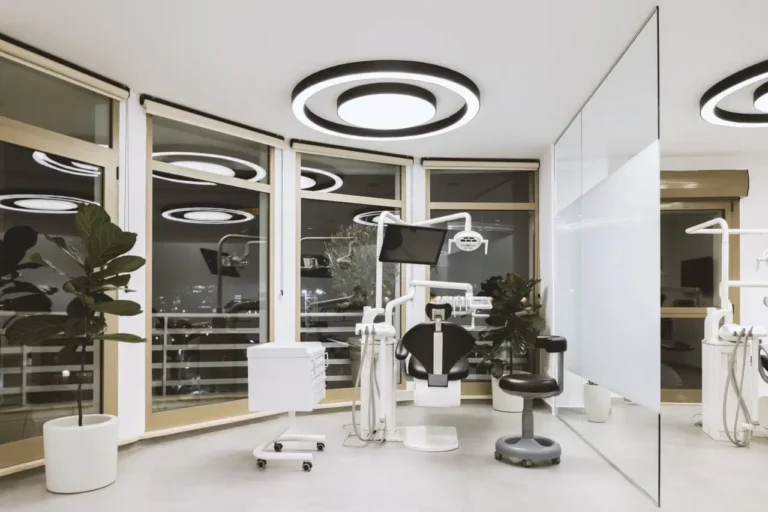
BBC Highlights Albania’s Rise in Dental Tourism: Why Tirana Is Becoming a New Destination for International Dental Care
Discover why dental tourism in Albania is growing and how to choose the right dental clinic in Tirana. Learn about dental implants, treatment safety,… Read more
-
 August 24, 2026
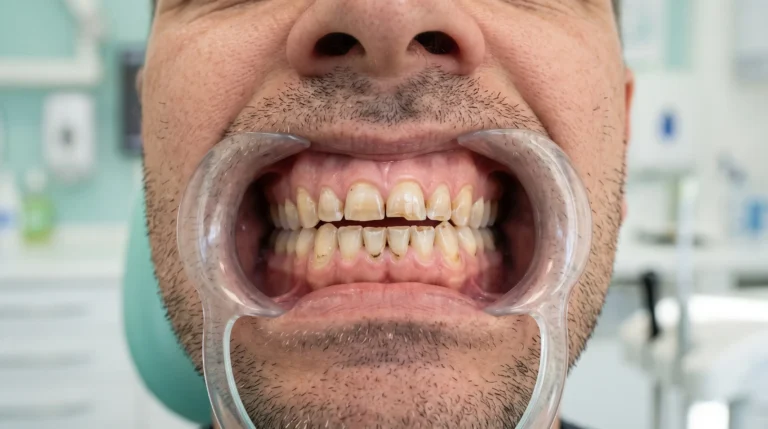
Full Mouth Restoration in Albania: Worn Teeth, Bite Collapse and Your Options
Learn how full mouth restoration in Albania can rebuild worn, damaged or missing teeth, restore a collapsed bite and improve function. Compare crowns, implants,… Read more
-
 August 23, 2026
Dental Treatment Abroad: Guarantees and What Happens If Something Goes Wrong
Learn what happens if something goes wrong after dental treatment abroad, including guarantees, remote follow-up, local dentist support and aftercare for UK and European… Read more
Ready to Start?
Your New Smile is One
Consultation Away
Send us your X-rays or dental photos and receive a full, personalised treatment plan — completely free of charge, within 24 hours. No obligation. No pressure. Just clarity.