

Dental Implant Materials in Albania: Titanium, Zirconia and What Andent Uses
Learn about dental implant materials in Albania, including titanium, zirconia, biocompatibility, osseointegration, implant longevity, and what Andent Clinic in Tirana uses for safe long-term results. This guide explains why titanium remains the gold standard for dental implants, how it compares with zirconia, what crown materials are used, and how international patients can choose trusted implant systems abroad.
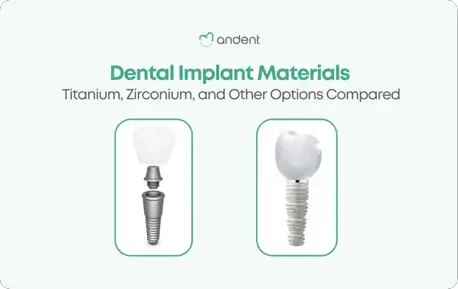
When discussing dental implant materials, it is essential to understand the differences between various options in order to make an informed decision. The materials used directly affect the duration, biocompatibility, and long-term success of the procedure.
In modern implantology, the most commonly used materials are titanium, zirconium, and some ceramic alloys. But what is the best choice for you?
In this article, we analyze the main features and differences between these materials, explaining why at Andent, we rely exclusively on titanium dental implants.
Why Is the Material of the Implant So Important?
The choice of material impacts various aspects of the treatment: from ease of integration with the bone to long-term durability, and the potential for unwanted reactions. Not all materials behave the same in the human body. Some, like titanium, have decades of research behind them, while others are newer technologies still being evaluated for long-term use.
Titanium: The Safest and Most Tested Choice
Titanium dental implants are now considered the gold standard in implantology. They have been used for over 40 years with clinical success rates above 95%.
Titanium is lightweight, durable, and, most importantly, biocompatible. This means it is recognized by the human body as a “friendly” material, capable of naturally integrating with the bone through a process called osseointegration. The risk of rejection or allergy is extremely low.
Additionally, titanium has exceptional durability. With proper care, a titanium implant can last a lifetime.
Zirconium: Aesthetic Appeal, But Less Studied
In recent years, zirconium dental implants have gained attention. These are ceramic implants, white in color, often promoted as a more “aesthetic” alternative to titanium.
However, zirconium still presents some uncertainties. Its biocompatibility is good, but long-term data on its durability are limited. Being a newer technology, it cannot boast the same reliability and history as titanium.
Moreover, the material is more fragile and may break more easily under heavy chewing loads. For these reasons, many clinics, including Andent, prefer not to use it.
Alloys and Coatings of Other Materials
There are also implants made from titanium alloys or with specific coatings, but the basic principle remains the same: ensuring biocompatibility and long-term resistance. Some surface treatments may further promote bone integration, but they do not replace the quality of the main material.
Which Material Is Right for You?
The choice depends on your clinical, aesthetic, and functional needs. However, for those seeking security, durability, and optimal integration, titanium dental implants remain the most reliable solution.
They are ideal for almost all patients, even with complex conditions. Their effectiveness is supported by decades of experience, clinical studies, and concrete results.
Biocompatibility: A Fundamental Factor?
Biocompatibility is what allows the implant to “fuse” with the bone. If the material is not well-tolerated by the body, complications, inflammation, or failure of the procedure may occur. This is why choosing a material like titanium guarantees safety and success.
A Lifetime Investment
Dental implants are not just an aesthetic solution; they are a true investment in your quality of life. That’s why it’s important to evaluate the longevity of the dental implant before making your choice. Titanium, due to its resistance and reliability, is currently unbeatable in this regard.
Which Dental Implant to Choose?
In summary, among the various materials for dental implants, titanium stands out as the safest, most tested, and longest-lasting choice. Although there are alternatives like zirconium, it’s important to rely on what has already proven to work over time.
At Andent, our priority is to offer patients safe, effective, and long-lasting implants. That’s why we work exclusively with titanium dental implants, as we firmly believe in the quality and peace of mind this material can provide.
Why the Material Inside Your Implant Matters
When patients come to Andent for dental implant consultations, the question that comes up most often after cost is: what is the implant actually made of? It is a good question, and the answer matters more than many people realise. The material used for a dental implant directly affects how well it integrates with your bone, how long it lasts, and how your body responds to it over time. Choosing the wrong material, or choosing a clinic that sources budget implant systems to keep costs artificially low, can lead to implant failure, inflammation, or the need for removal and replacement years down the line.
At Andent Clinic in Tirana, all implants are titanium. Not titanium alloy hybrids. Not zirconia ceramic. Titanium, from established manufacturers with decades of clinical evidence supporting their use. This is not a random choice. It reflects what more than 40 years of implantology research consistently confirms: titanium is the safest, most reliable, and most clinically validated material available for dental implants today.
Titanium: The Gold Standard in Implantology
Titanium has been used in dental implants since the 1960s, when Swedish orthopaedic surgeon Per-Ingvar Branemark first documented the phenomenon of osseointegration, the ability of titanium to fuse directly with living bone. That discovery transformed modern dentistry and led to titanium becoming the material of choice for implant manufacturers worldwide.
The clinical success rate for titanium dental implants placed by trained surgeons is above 95 percent over ten years. Some long-term studies show success rates above 90 percent at 20 years with proper maintenance. This is an extraordinarily strong record for any medical device, and it is the reason that every major dental implant manufacturer in the world, from Nobel Biocare to Straumann to Osstem, bases its premium implant systems on titanium.
Titanium is biocompatible, meaning the human body does not recognise it as a foreign threat. It does not trigger an immune response in the overwhelming majority of patients. True titanium allergies exist but are extremely rare, affecting an estimated 0.6 percent of the population. For the remaining 99-plus percent of patients, a titanium implant integrates with the jaw smoothly, becomes structurally part of the bone within three to six months, and provides a stable, permanent foundation for a crown or bridge.
The durability of titanium is also exceptional. It is lightweight, corrosion-resistant, and capable of withstanding the significant bite forces that dental implants encounter day after day over decades. With proper oral hygiene and regular check-ups, a titanium implant placed today has a realistic chance of lasting a lifetime.
What About Zirconia Implants?
Zirconia ceramic implants have attracted attention in recent years, primarily because of their white colour and their marketing as a metal-free alternative. For patients with aesthetic concerns about a titanium post being visible at the gumline, zirconia does offer a cosmetic advantage.
The clinical reality of zirconia implants is more complex, however. Long-term data on zirconia implant performance is limited because the technology is significantly younger than titanium implantology. The evidence base for titanium spans four decades and tens of millions of placed implants. For zirconia, the comparable data does not yet exist.
Several studies have raised concerns about the fracture resistance of zirconia under load. Zirconia is hard but brittle, meaning it can crack under the sustained mechanical stress of normal chewing, particularly in the posterior regions of the mouth where bite forces are highest. The surface characteristics of zirconia also make it harder to achieve the same level of osseointegration as titanium, which has been surface-treated and optimised for bone fusion over decades of research and development.
For these reasons, Andent Clinic does not use zirconia implants. The team is not philosophically opposed to new materials, but the standard at Andent is to use treatments with the strongest available evidence base, and for dental implants that means titanium.
What About the Crown on Top of the Implant?
While the implant itself is always titanium at Andent, the restoration placed on top of the implant, the visible crown that replaces the tooth, is most commonly made from zirconia or porcelain-fused-to-zirconia. This is an entirely different use of the material than a zirconia implant fixture, and it is well established and widely accepted.
Zirconia crowns are excellent in this application. They are strong, lifelike in appearance, and resistant to the staining that affects some other crown materials. The majority of Andent’s implant restorations use monolithic zirconia or layered zirconia crowns fabricated in the clinic’s own dental laboratory under direct clinical supervision.
For anterior teeth where aesthetics are the primary concern, layered feldspathic porcelain or lithium disilicate (e-max) restorations may be recommended, as these offer exceptionally natural translucency. Your treating dentist will recommend the most appropriate crown material for your specific tooth position and aesthetic requirements.
How to Evaluate the Implant Brand a Clinic Is Using
Not all titanium implants are the same. There is a wide range of manufacturers in the market, from established premium brands with extensive clinical research behind them to lower-cost systems with minimal long-term data. The cheapest way to keep implant costs down is to use budget implant systems, and some clinics in Albania and elsewhere do exactly that while marketing their services as high quality.
Before committing to treatment at any clinic, ask specifically which implant manufacturer and system will be used for your procedure. Reputable manufacturers with strong clinical evidence include Nobel Biocare, Straumann, Osstem, Zimmer Biomet, and BioHorizons. If a clinic cannot or will not tell you what implant brand they use, that is a warning sign worth taking seriously.
Frequently Asked Questions About Dental Implant Materials
Can I be allergic to a titanium implant?
True titanium allergy is extremely rare. Before your procedure, Andent’s clinical team reviews your medical history to identify any contraindications. If there is a genuine clinical reason to avoid titanium in your specific case, this will be discussed during your consultation.
Is zirconia better than titanium for implants?
The evidence does not support this claim. Titanium has a longer clinical track record, higher documented success rates, and better osseointegration characteristics. Zirconia implants are newer and have less long-term data. Andent uses titanium exclusively for these clinical reasons.
Does the implant crown material affect longevity?
The crown material affects aesthetics, strength, and durability. Zirconia crowns are the most durable option and are highly stain-resistant. Your treating dentist will recommend the best crown material for your specific tooth position and requirements.
How do I know if a clinic is using budget implants?
Ask directly. A reputable clinic will name the manufacturer and model of implant being used. You can then research that brand independently. If a clinic is vague or evasive about this, choose a different clinic.
Do implants from Albania come with a warranty?
Yes. Andent provides a warranty on all implant work. The terms are confirmed in writing before treatment begins.
Newsletter
Get Dental Tips in Your Inbox
One email per month. Expert guides, patient stories, and exclusive offers — no spam.
Get Started
Free Treatment Plan in 24 Hours
Send us your X-rays or photos. Our specialists will reply with a full, personalised quote — no obligation.
Latest Articles
-
 October 4, 2026
Why Are Dental Implants So Expensive? (And How to Pay 70% Less)
Learn what drives dental implant costs in the UK, why the NHS rarely covers implants, and how treatment in Tirana can reduce the total… Read more
-
 October 4, 2026
How Long Are NHS Dentist Waiting Lists? (And the Fastest Way to Skip the Line)
See how long NHS dentist waiting lists can be, why delays happen, how dental problems can progress, and what alternatives UK patients may consider. Read more
-
 October 3, 2026
How to Find Affordable Dental Care Without Insurance
Explore practical ways to find affordable dental care without insurance, from dental schools and payment plans to lower-cost treatment at Andent Clinic in Tirana. Read more
Ready to Start?
Your New Smile is One
Consultation Away
Send us your X-rays or dental photos and receive a personalised treatment plan with clear pricing within 24 hours — completely free of charge. No obligation. No pressure. Just clarity.