
More and more people are choosing dental veneers to enhance the aesthetics of their smile. These are thin layers applied to the front of teeth to correct imperfections such as discoloration, small fractures, gaps between teeth, or slight irregularities in shape. The result? A bright, harmonious, and natural smile without invasive procedures.
For more information, you can visit Andent’s dedicated page or consult authoritative resources like the American Academy of Cosmetic Dentistry (AACD).
How Long Do They Last?
One of the most common questions we receive is: how long do they last? The answer isn’t the same for everyone, as it depends on the type of material chosen and how well they are maintained over time. On average, their lifespan ranges from 5 to 15 years, but with proper care, they can last even longer.
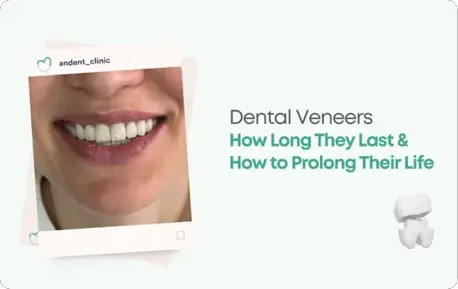
The Different Types of Dental Veneers:
- Porcelain Veneers: These are the most durable and resistant. They offer excellent aesthetics, closely resembling natural enamel, and are more resistant to stains and wear. With good maintenance, they can last 15 years or more.
- Composite Veneers: A more affordable and quicker option. They are shaped directly on the tooth and require only one appointment. However, they are less durable than porcelain and tend to stain more easily. Their average lifespan is 5-7 years.
- Zirconia Veneers: A very solid material, often used in implantology, but also used for veneers in specific cases.
- E-max Veneers: Made from lithium disilicate, a particularly strong and translucent ceramic, ideal for aesthetics. Both solutions offer durability and brightness, with an average lifespan of 10-15 years.
What Affects the Durability of Dental Veneers?
It’s not just about choosing the best material; the way you care for the veneers also plays a vital role in their longevity. Here are the main factors that affect their lifespan:
- Oral Hygiene: Brushing your teeth twice a day with a soft toothbrush and using floss helps prevent gum issues that could compromise the veneers.
- Diet: Avoiding stain-causing foods and drinks (like coffee, red wine, tea, and smoking) is especially important for composite veneers.
- Regular Check-ups: Having check-ups every 6-12 months allows the dentist to intervene promptly in case of microfractures or detachment.
- Bruxism: Those who grind their teeth at night should use a night guard to protect the veneers from wear or breakage.
- Bad Habits: Biting hard objects (pens, ice, nails) can damage even the most durable veneers.
How to Prolong the Life of Dental Veneers?
Here are some practical tips to make your veneers last as long as possible:
- Use a soft-bristled toothbrush to gently clean the veneers without scratching the surface.
- Avoid abrasive toothpaste that could wear down the enamel or veneer surface.
- Limit consumption of dark drinks, and if you do drink them, try using a straw to reduce contact with your teeth.
- Do not use your teeth as tools (opening bottles or packages), as this is risky for any dental prosthesis.
- Wear a night guard if you have bruxism or engage in contact sports.
Dental veneers are an excellent choice to improve your smile quickly and effectively. Their durability depends on several factors, including the material used and the care taken over time. Whether you choose porcelain, composite, zirconia, or E-max veneers, following simple rules can help keep them beautiful and functional for many years.
At Andent, we create custom veneers for each patient, carefully evaluating materials and aesthetic expectations. Contact us today to find the best solution for your smile!
Veneers Have Transformed Thousands of Smiles. Here Is the Full Picture.
Dental veneers are one of the most transformative treatments in cosmetic dentistry. A thin shell of porcelain or composite material bonded to the front surface of a tooth can correct discolouration, close gaps, reshape uneven edges, and completely change the appearance of a smile in a short amount of time. It is not surprising that veneers have become one of the most requested treatments at Andent Clinic in Tirana, particularly among international patients who have been quoted prices in the UK or Italy that put the treatment out of reach.
At Andent, porcelain veneers start from 150 euros per tooth. In Italy, the same treatment typically costs 400 to 800 euros per tooth. In the UK, prices reach 500 to 1,000 pounds. A patient wanting eight veneers, a typical number for a full smile transformation, could save 3,000 to 6,000 euros by having the treatment done in Tirana. That is a significant difference, and it is one of the reasons Andent welcomes patients specifically for veneer treatment from across Europe.
Understanding the Different Types of Veneers
Not all veneers are the same material, and the differences between them are worth understanding before you decide on treatment.
Porcelain veneers are the most durable and aesthetically superior option. They are fabricated in a dental laboratory from high-quality ceramic material, custom-matched to the shade and translucency of your natural teeth. Porcelain closely mimics the way natural tooth enamel interacts with light, producing a result that is difficult to distinguish from your own teeth. With proper care, porcelain veneers last 12 to 15 years or more. They are also highly resistant to staining compared to other materials.
Composite veneers are applied directly to the tooth surface by the dentist in a single appointment. They are faster and less expensive than porcelain but also less durable. Composite material stains more easily and has a shorter average lifespan of five to seven years. For younger patients or those with a limited budget, composite veneers offer a meaningful improvement. For patients wanting long-term results, porcelain is the better investment.
E-max veneers, made from lithium disilicate ceramic, combine excellent strength with outstanding aesthetics. They are thinner than standard porcelain veneers, which means less natural tooth preparation is needed. Their translucency is exceptional, making them a popular choice for front teeth where natural-looking light transmission is important. Lifespan is comparable to porcelain, typically ten to fifteen years with proper care.
Zirconia veneers exist but are less commonly used for cosmetic applications. Zirconia is extremely strong but less translucent than porcelain or e-max, which can produce a slightly opaque appearance. They are better suited to patients with significant structural concerns than to straightforward cosmetic cases.
The Veneer Process at Andent: What Happens Step by Step
The first appointment is a comprehensive consultation and digital assessment. The Andent team uses Digital Smile Design software to create a visual simulation of how your teeth will look after veneers. This allows you to see and approve the proposed result before any tooth preparation takes place. It is one of the most important steps in the process because it ensures that your expectations and the clinical outcome align.
Tooth preparation for porcelain veneers involves removing a small amount of enamel from the front surface of the tooth, typically 0.3 to 0.7 millimetres, to create space for the veneer to sit flush with the surrounding teeth. A digital impression is then taken and sent to the Andent in-house dental laboratory, where technicians fabricate the custom veneers. This process takes two to three days.
At the fitting appointment, the veneers are tried in position, the shade and shape are verified against the agreed design, and any minor adjustments are made. Once you and the dentist are satisfied, the veneers are permanently bonded to the tooth surface using dental adhesive and light-cured in place. The result is immediate and visible the moment the procedure is complete.
For international patients, both preparation and fitting appointments can typically be completed within a four to five day visit to Tirana, which makes the entire process manageable within a single trip.
How to Make Your Veneers Last as Long as Possible
Porcelain veneers are durable, but they are not indestructible. The single most damaging habit for veneer longevity is bruxism, the grinding or clenching of teeth during sleep. The force generated during bruxism episodes is far beyond what normal biting and chewing produces, and it can crack or dislodge veneers over time. If you grind your teeth, Andent will recommend a custom nightguard to protect your veneers. This is a small additional investment that significantly extends the lifespan of the treatment.
Avoid using your front teeth as tools. Opening packaging, biting nails, or holding objects with your teeth places stress on veneers that they are not designed to withstand. This is a common cause of chipping, particularly with composite veneers.
Oral hygiene is just as important with veneers as without them. Brush twice daily with a soft-bristled brush and non-abrasive toothpaste. Abrasive whitening toothpastes can scratch the veneer surface over time, dulling the finish. Floss or use an interdental brush daily to keep the gum tissue around the veneer margins healthy.
Limit consumption of highly pigmented drinks such as coffee, red wine, and black tea. While porcelain itself is stain-resistant, the bonding margin at the edge of the veneer can absorb colour over time, creating a visible line. Using a straw for these drinks reduces contact with the tooth surface.
Veneers in Albania vs Getting Them at Home
The quality of veneers depends primarily on two things: the skill of the dentist doing the preparation and the quality of the dental laboratory producing the restoration. Andent’s in-house laboratory operates to a high standard, and the clinical team has extensive experience with both the preparation and bonding phases of veneer treatment. Patients who travel from Italy or the UK for veneers at Andent consistently report results that compare favourably with what they could have received at home, at a fraction of the cost.
The most common concern about getting veneers abroad is what happens if there is an issue after returning home. At Andent, all cosmetic work is covered by a warranty, and minor adjustments can often be handled by a local dentist working from Andent’s clinical records and guidance. For any significant concerns, the clinic arranges follow-up appointments.
Frequently Asked Questions About Veneers in Albania
Are veneers permanent?
Veneer preparation involves removing a small amount of enamel, which cannot be replaced. This means that once you have veneers, you will always need them on those teeth. The veneers themselves last 10 to 15 years on average and can be replaced when needed.
Do veneers damage your natural teeth?
The preparation process removes a small amount of enamel, but this is conservative and deliberate. Modern minimal-prep and no-prep veneers reduce this further. At Andent, the preparation is tailored to preserve as much natural tooth structure as possible.
Can veneers fix crooked teeth?
Veneers can camouflage mild misalignment and create the appearance of a straighter smile. For significant crowding or bite issues, orthodontic treatment is the more appropriate solution. Often a combination approach is used.
How many veneers do I need for a full smile makeover?
Most patients opt for six to ten veneers covering the teeth that show most prominently when smiling. Your Andent dentist will advise based on your specific smile line and aesthetic goals.
Can I whiten my teeth after getting veneers?
Porcelain does not respond to teeth whitening treatments. If you want a brighter shade for your veneers, this is agreed before they are fabricated. It is best to whiten natural teeth before getting veneers so that both can be matched to the desired final shade.