

Dental Prosthetics in Albania for
Crowns, Bridges, and Dentures.
Whether you need a single partial denture, a full set of conventional dentures, an implant-supported overdenture, or a complete fixed arch, Andent Clinic fabricates every prosthetic in-house in Tirana. Results in days, not weeks. Up to 80% less than UK private prosthetics fees.
Prosthodontics in Albania for
Crowns, Bridges, Dentures and Implant Restorations
From removable dentures to fully fixed implant restorations, Andent Clinic offers the complete prosthetics spectrum in Tirana. Not all prosthetics are the same. The right solution for replacing missing teeth depends on how many teeth are missing, the condition of the remaining teeth and bone, the patient’s lifestyle, and budget. For international patients choosing dental tourism in Albania, Andent Clinic provides prosthetic treatment planning, in-house laboratory fabrication, and coordinated clinical care in one place.
This page covers the full range of prosthetic options available at Andent Clinic, from conventional removable dentures through to implant-supported fixed arches. Depending on the case, your plan may include dental implants, dental crowns, dental bridges, All-on-4 dental implants, or a complete full-arch restoration.
Conventional Dentures
The most accessible prosthetic option. Conventional dentures rest on the gum tissue and rely on suction and soft tissue for retention. They are suitable when dental implant placement is not an option, or when the patient prefers a removable solution at the lowest cost. They function well initially but may require replacement or relining as the jaw bone changes over time.
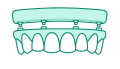
Implant-Retained Overdenture
Two or four dental implants serve as anchor points for a removable denture. The prosthesis clips on or locks onto the implants, eliminating movement during eating and speaking. It is still removed for nightly cleaning, but gives a major functional improvement over a conventional denture. This option can be ideal for patients who want more stability without choosing a fully fixed All-on-4 restoration.
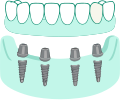
Fixed Full-Arch Prosthesis
The All-on-4 or All-on-6 prosthesis is permanently fixed to four or six implants. It cannot be removed except by a dentist and functions like natural teeth in every respect. It is the closest restoration to biological dentition currently available in clinical practice. For patients comparing full-mouth restoration options, this can be combined with zirconia crowns, dental bridges, and full smile planning.
Not sure which prosthetic solution is right for you? Book a free consultation and send clear photos, a panoramic X-ray, or details of your previous dental treatment. The Andent clinical team can advise whether your case is better suited to removable dentures, an implant-retained overdenture, dental bridges, crowns, or a fixed full-arch implant restoration.
The honest breakdown
of every prosthetic type
Understanding what each prosthetic type can and cannot do is the only way to make an informed decision. Here is a direct account of each option, including what works well, what the trade-offs are, and when it makes sense clinically.

Complete dentures:
when they are the right choice
A complete denture replaces a full arch of missing teeth with an acrylic base shaped to rest on the gum ridge. The upper denture relies heavily on suction against the palate. The lower denture is inherently less stable because the tongue and cheek muscles work against it constantly.
Complete dentures are the right choice when: all teeth in an arch are already lost, the patient does not want implant surgery or is medically unsuitable for it, or the budget available does not extend to implant-based solutions. They are also the only option when the bone is too severely resorbed to support implants without extensive grafting.
What patients are not always told before getting conventional dentures: the jaw bone beneath a denture continues to resorb over time because there is no root to stimulate it. This is why dentures become loose and need relining or replacement every few years. The resorption is progressive and permanent. A denture that fits well at 60 may be uncomfortably loose at 70 because the gum ridge has changed shape.
At Andent Clinic, complete dentures are fabricated using premium acrylic teeth with natural-looking gradient colouring and a base shade matched to each patient’s gum tissue. The aesthetic result is significantly better than standard NHS-equivalent acrylic. The in-house laboratory allows multiple try-in appointments within the same visit so that fit and appearance are confirmed before the final prosthesis is processed.
What works well
- Most affordable full-arch solution
- No surgery required
- Quick fabrication in 4 to 5 days
- Easily adjusted or replaced
- Works even with very little bone
Trade-offs to know
- Can move during eating and speaking
- Bone continues to resorb beneath it
- Needs relining or replacement every 5 to 8 years
- Lower denture is less stable than upper

Partial dentures: replacing
some teeth while keeping others
A partial denture fills the gaps left by missing teeth while clasping or resting on the remaining natural teeth for support. It is the primary prosthetic solution when some teeth remain in the arch. Two main types exist at Andent Clinic: the flexible Valplast partial and the chrome-cobalt metal framework partial.
Valplast flexible partials use a nylon thermoplastic material that is tooth-coloured and flexible. There are no visible metal clasps, which makes them cosmetically superior to metal partials particularly in the front of the mouth. The flexibility makes them comfortable and reduces the risk of fracture if dropped. The trade-off is that Valplast cannot be adjusted or added to after fabrication, so any future tooth loss requires a new prosthesis.
Chrome-cobalt metal framework partials use a rigid metal skeleton with acrylic teeth and gum material. The metal framework is stronger, thinner, and more accurate in fit than acrylic. Metal clasps secure the prosthesis to the remaining teeth. This rigidity means the prosthesis can be modified if further teeth are lost, making it the more practical long-term investment for patients whose remaining teeth may not all survive indefinitely.
Valplast advantages
- No visible metal clasps
- Very comfortable and flexible
- Natural gum colouring throughout
- Fracture-resistant if dropped
Chrome-cobalt advantages
- Stronger, thinner, more precise fit
- Can be added to if more teeth are lost
- Longer lifespan (8 to 12 years)
- Better load distribution to remaining teeth

Telescopic prosthetics:
the option most patients have not heard of
A telescopic prosthesis is one of the most technically sophisticated options in removable prosthetics, and one of the least frequently offered in standard dental practice because of the clinical complexity involved in fabricating it correctly.
The system works using a double-crown mechanism. Inner primary crowns are permanently cemented onto the abutment teeth (or implants). The outer secondary crowns are integrated into the removable prosthesis and fit precisely over the inner crowns, locked in place by friction. When the prosthesis is seated, the frictional connection between inner and outer crowns provides exceptional retention without any visible clasps or attachments.
The clinical advantage of the telescopic system is profound for patients with a small number of remaining natural teeth. Rather than subjecting those remaining teeth to the leverage forces of a conventional partial denture, the telescopic design distributes occlusal forces precisely through the crowns and into the roots. The remaining teeth are protected rather than stressed. When a tooth is eventually lost, the prosthesis can often be modified rather than replaced entirely.
Telescopic prosthetics are also the preferred choice for patients who have enough remaining teeth or implants to support the system but for whom a fully fixed bridge is not possible. They offer retention and stability that far exceeds conventional removable options while remaining removable for cleaning.
Key advantages
- Exceptional retention without visible clasps
- Protects remaining natural teeth from leverage forces
- Can be modified if additional teeth are lost
- Works on both natural teeth and implants
- Superior aesthetics compared to metal clasps
Considerations
- Requires precise clinical and lab work
- Abutment teeth need crown preparation
- Higher initial cost than conventional partials
- Fewer clinicians have the skill set to fabricate correctly
When prosthetics are anchored
to something that does not move
The fundamental limitation of all conventional removable prosthetics is that they rest on tissue that changes. The jaw bone beneath a denture resorbs. The gum ridge that once held the prosthesis firmly eventually flattens. Implant-supported prosthetics remove this limitation by anchoring the restoration to the bone itself.

Two implants placed in the front of the lower jaw provide anchor points with ball-and-socket attachments. The existing denture is modified with corresponding female sockets. Clicking the denture onto the implants transforms a loose unstable prosthesis into one that does not move. The denture is still removed at night for cleaning. Considered the minimum implant intervention for dramatically improving denture stability.
Four implants are connected by a precision-milled titanium bar that runs along the jaw. The prosthesis clips onto the bar using Locator or clip attachments. The bar distributes forces more evenly than individual ball attachments and provides superior retention. Suitable for both upper and lower jaws. The prosthesis is removed for cleaning but is noticeably more stable than a two-implant snap-on during function.

Four or six implants support a permanently fixed zirconia or reinforced acrylic prosthesis that functions exactly like natural teeth. Nothing moves. Nothing clicks. Nothing comes out at night. The implants stimulate the jaw bone preventing resorption. The prosthesis is fabricated in the in-house laboratory and permanently screwed to the implants. It can only be removed by a dentist. The clinical and quality-of-life difference between a fixed arch prosthesis and any removable option is significant.
Prosthetic materials:
what each one offers and where it is used
The material a prosthesis is made from determines its aesthetics, its strength, its weight, and how it interacts with the tissues in the mouth over time. Here is the honest breakdown of each material used in Andent Clinic’s in-house laboratory.

Premium Acrylic
High-impact acrylic is the standard base material for complete dentures. The teeth are set in acrylic and the base is characterised to match gum tissue colour. Modern premium acrylic teeth have graduated colouring similar to natural dentition. Acrylic is comfortable against soft tissue, easily adjusted, and can be repaired. It is not the strongest material for heavy occlusal loads.
Complete dentures · Immediate dentures
Chrome-Cobalt Alloy
A rigid metal alloy used for partial denture frameworks. Significantly stronger and thinner than acrylic alone. The precise fit of a chrome-cobalt framework distributes occlusal forces through the remaining teeth more effectively than a plastic framework. Can be cast or milled digitally using CAD/CAM technology for improved accuracy. The metal is non-precious and biocompatible.
Partial denture frameworks · Telescopic inner crowns
Valplast Thermoplastic Nylon
A flexible biocompatible nylon used exclusively for partial dentures. The material is tooth-coloured and gum-coloured throughout, eliminating the need for visible metal clasps. Its flexibility allows it to enter undercuts that rigid materials cannot, improving retention in some cases. Cannot be adjusted or repaired after fabrication; any future changes require a new prosthesis.
Flexible partial dentures · Cosmetically sensitive cases
Monolithic Zirconia
The highest-strength ceramic material available for dental prosthetics. Used for the definitive prostheses in All-on-4 and All-on-6 fixed arches. Zirconia resists chewing forces that would fracture weaker ceramics, is biocompatible, metal-free, and provides excellent aesthetics. Each zirconia arch is milled from a single block in the in-house CAD/CAM laboratory to tolerances of 0.01mm.
All-on-4 and All-on-6 definitive prostheses
Reinforced Acrylic (PMMA)
Polymethyl methacrylate reinforced with glass fibre or metal mesh. Used for the provisional fixed prosthesis placed immediately after All-on-4 or All-on-6 surgery. Lighter and less expensive than zirconia, but adequate for the osseointegration period. The reinforced structure resists fracture during the critical healing phase when bite forces need to be carefully managed. Replaced by the definitive zirconia arch after full osseointegration.
Provisional All-on-4 and All-on-6 prostheses
Titanium (frameworks and attachments)
Titanium is used for bar superstructures in bar-retained overdentures and for the screw-retained connections in fixed arch prostheses. It is the same biocompatible titanium alloy used in implants. Titanium components are precision-milled digitally for exact fit. The connection between titanium components and implant bodies is the most critical junction in any implant-supported prosthesis.
Bar-retained overdentures · Implant connectionsThe bone resorption problem that every denture wearer should understand
When a tooth is removed, the jaw bone that supported it begins to resorb because there is no longer a root transmitting forces into the bone. This resorption is progressive and permanent. A complete denture resting on the gum ridge accelerates this process in one important way: each time the denture is pressed onto the bone during chewing, the pressure accelerates resorption of the ridge beneath it.
The clinical consequence over time is a flattening of the jaw ridge that makes dentures increasingly difficult to retain. Patients who wore well-fitting dentures at 60 often struggle with significantly looser prosthetics at 70 and cannot get adequate retention from dentures at 80. This is not a denture quality problem; it is the inevitable consequence of bone resorption continuing over decades.
Implants interrupt this process. A titanium implant in the bone stimulates it through osseointegration, transmitting forces that signal the bone to maintain its density and volume. The jaw bone around a well-placed implant remains stable in a way that the ridge beneath a conventional denture does not. This is the most important long-term clinical argument for implant-supported prosthetics that most patients do not hear until the problem has already progressed substantially.
From clinical records
to fitted prosthesis in one visit
Because the laboratory is inside the clinic building, the prosthetic fabrication process at Andent is significantly faster than at practices relying on external laboratories. Most prosthetics are completed within a single 5 to 7 day visit, with multiple try-in appointments to confirm fit and aesthetics before the final prosthesis is finished.
Clinical assessment and records
Examination, X-rays and impressions of both arches. Assessment of bite registration, existing tooth positions (if applicable), and soft tissue conditions. Shade selection using a tooth and gum guide in natural light.
Framework fabrication or wax trial
For metal framework partials: framework is cast and refined. For complete dentures: wax try-in arrangement allows the patient to evaluate the tooth positions, smile line, and vertical dimension before any irreversible processing occurs.
Wax try-in appointment
The wax prosthesis is seated in the mouth and assessed from every angle. Tooth shape, colour, and gum characterisation are evaluated and adjusted. The clinician and technician review together. Any changes are made before the final processing step.
Processing and finishing
For acrylic prosthetics: the wax is replaced with acrylic in a controlled curing process. For metal and Valplast partials: final finishing and polishing. For telescopic and implant-supported prosthetics: digital milling and assembly.
Fitting and occlusal adjustment
The finished prosthesis is fitted. Pressure points are identified and relieved. Bite is verified across all contact points. Adjustments are made chairside as needed. For implant prosthetics: torque values are verified and recorded.
Final check and clinical report
A final review appointment confirms comfort and function. Full clinical documentation is provided in English for the patient’s home dentist. Instructions on cleaning, maintenance, and when to seek review are provided before departure.
Signs that your current denture
needs replacing or upgrading
Many patients come to Andent Clinic not because they are getting dentures for the first time, but because their existing dentures are failing them. The signs are usually gradual enough that patients adapt their eating habits and social behaviour around them without fully registering the deterioration.

Movement during eating or speaking
If you are modifying your diet to avoid foods that might dislodge your denture, or if you are conscious of the prosthesis moving when you speak, the denture has become ill-fitting and needs attention.

Sore spots on the gum tissue
Localised soreness or ulceration under a denture indicates pressure points from an ill-fitting base. Left untreated, persistent pressure on the gum tissue can cause irreversible damage.
The denture is more than 5 to 7 years old
Even a well-made denture becomes ill-fitting over time as the jaw bone beneath it resorbs. A denture that fitted perfectly at fabrication rarely fits well 7 years later without relining.
Using denture adhesive habitually
Occasional use of adhesive for specific occasions is acceptable. Relying on adhesive daily to hold the denture in place is a sign that the fit has deteriorated and either relining or replacement is needed.

Changes in facial appearance
As bone resorbs and the vertical dimension of the jaw changes, the face takes on a sunken appearance. A correctly designed replacement denture restores the facial height that was present when the original denture was made.
- Clinical assessment to establish whether the prosthesis needs relining, rebasing, or full replacement
- Relining: new acrylic is added to the fitting surface to restore the match between prosthesis and changed gum tissue. Faster and less expensive than replacement when the prosthetic teeth are still in good condition
- Rebasing: the entire acrylic base is replaced while keeping the existing tooth arrangement. Used when the teeth are acceptable but the base has become porous or structurally compromised
- Full replacement with improved design: when the existing prosthesis has fundamental design problems beyond fit, a new prosthesis is planned with improved retention features, corrected occlusion, and updated aesthetics
- Upgrade to implant-supported: when a patient arrives with failing conventional dentures, the discussion always includes the implant-supported option. For many patients who have lived with loose dentures for years, this is the conversation that changes their quality of life
Prosthetics costs: Albania
vs UK, Germany and Switzerland
All Andent Clinic prices are for the complete fabrication and fitting process. UK and European prices reflect average private dental prosthetics fees in each country. NHS prices in the UK are provided for context only as they cover limited prosthetic options.
| Prosthetic type | UK private | Germany | Switzerland | Andent, Albania | Saving vs UK |
|---|---|---|---|---|---|
| Complete acrylic denture (per arch) | £1,000 to £2,000 | €900 to €1,800 | CHF 1,400 to 2,800 | €350 to €600 | up to 75% |
| Complete dentures (both arches) | £2,000 to £4,000 | €1,800 to €3,600 | CHF 2,800 to 5,600 | €700 to €1,200 | up to 75% |
| Flexible partial denture (Valplast) | £1,200 to £2,200 | €1,100 to €2,000 | CHF 1,600 to 3,000 | €400 to €650 | up to 73% |
| Chrome-cobalt partial framework | £1,400 to £2,500 | €1,200 to €2,200 | CHF 1,800 to 3,500 | €450 to €750 | up to 73% |
| Telescopic prosthesis | £5,000 to £12,000 | €4,500 to €11,000 | CHF 7,000 to 16,000 | €1,500 to €3,500 | up to 75% |
| Implant overdenture (2 implants + prosthesis) | £4,000 to £7,000 | €3,500 to €6,500 | CHF 5,500 to 9,000 | €1,200 to €2,000 | up to 76% |
| All-on-4 fixed arch (complete) | £10,000 to £18,000 | €9,000 to €16,000 | CHF 14,000 to 22,000 | €3,200 to €3,400 | up to 74% |
| Denture reline (existing prosthesis) | £400 to £800 | €350 to €700 | CHF 550 to 1,000 | €150 to €250 | up to 70% |
Why is prosthetics significantly cheaper in Albania? Albania applies zero VAT on medical procedures. UK dental laboratories pay standard VAT on their services, which ultimately forms part of the fee charged to patients. Additionally, the cost of dental technician labour in Tirana is substantially lower than in London or Frankfurt. The acrylic resins, metal alloys, and zirconia blocks used in Andent’s laboratory are sourced from European manufacturers and cost the same regardless of where they are processed. The material is identical; the fabrication overhead is not.
Dental prosthetics abroad: who benefits and what to expect
Not every prosthetic treatment is a practical candidate for dental tourism. A routine denture reline or a single partial denture requires 1 to 2 days at most and represents a relatively modest saving over UK prices. For those cases, the arithmetic of travel may not justify the trip unless it is combined with other treatments.
The cases where prosthetic treatment abroad makes a compelling argument are the more complex ones. A full set of complete dentures for both arches costs £2,000 to £4,000 in UK private practice and €700 to €1,200 at Andent Clinic. A telescopic prosthesis costs £5,000 to £12,000 in the UK and €1,500 to €3,500 in Tirana. A complete All-on-4 solution costs £10,000 to £18,000 in the UK and €3,200 to €3,400 in Albania. For these cases, the saving is substantial enough that the cost of the trip is a minor fraction of the total benefit.
The in-house laboratory is the feature that makes prosthetic dental tourism at Andent Clinic specifically viable. External laboratories in the UK take 7 to 14 days to return a completed prosthesis. Andent’s in-house process takes 4 to 6 days for most prosthetics. That difference is the difference between a treatment that can be completed in a single one-week visit and one that would require two separate trips or a much longer stay.
For patients with existing dentures that need relining or replacing, the trip can be remarkably efficient. A clinical assessment and reline takes 1 to 2 days. A full denture replacement takes 5 to 6 days. Many patients combine the prosthetic work with other treatments they have been deferring because of UK prices: a few crowns, teeth whitening, or a periodontal clean. The clinic coordinates all treatments into a single schedule so nothing is left incomplete when the patient returns home.
What patients say about
their treatments at Andent
What patients ask before
choosing Andent Clinic
Ready for a personal quote?
Send photos of your current situation or any existing X-rays. The clinical team reviews your case and sends a personalised prosthetics recommendation and exact price within 24 hours.

Mon to Sat · 9:00 to 18:00 CET
WhatsApp available 7 days
Response within 24 hours
Other treatments to combine
in the same trip


Better-fitting prosthetics.
A fraction of what you have been quoted.
Send photos or X-rays of your current situation. We review your case and send a personalised prosthetics recommendation with exact pricing in 24 hours. Free, no obligation.